
 |
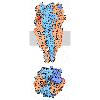
Acetylcholine Receptor
The neurotransmitter acetylcholine opens a protein channel, stimulating muscle contraction
|
 |
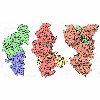
Acetylcholinesterase
Acetylcholinesterase stops the signal between a nerve cell and a muscle cell
|
 |
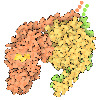
Actin
Cells are supported by a cytoskeleton of protein filaments
|
 |
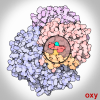
Anthrax Toxin
Anthrax bacteria build a deadly three-part toxin
|
 |
Aquaporin
Aquaporins create a channel for water molecules to cross through cell membranes
|
 |
Cholera Toxin
Many bacterial toxins have two parts: one that finds a cell, the other that kills it
|
 |
Cytochrome p450
Cytochrome p450 detoxifies and solubilizes drugs and poisons by modifying them with oxygen
|
 |
G Proteins
G proteins receive signals from cellular receptors and deliver them inside the cell
|
 |
Glutathione Transferases
Glutathione transferase tags toxic molecules, making them easy to recognize and remove.
|
 |
Hemoglobin
Hemoglobin uses a change in shape to increase the efficiency of oxygen transport
|
 |
Incretins
GLP-1 and GIP are hormones that are released soon after you eat a meal
|
 |
Lead Poisoning
Lead ions poison proteins throughout the body, blocking their normal function.
|
 |
Phospholipase A2
Phospholipase A2 breaks membrane lipids, forming molecules that contribute to inflammation and pain signaling.
|
 |
Potassium Channels
Potassium channels allow potassium ions to pass, but block smaller sodium ions
|
 |
Ricin
The structure of ricin reveals how it kills cells and how vaccines can produce immunity against ricin poisoning
|
 |
RNA Polymerase
RNA polymerase transcribes genetic information from DNA into RNA
|
 |
Sodium-Potassium Pump
Cells continually pump sodium ions out and potassium ions in, powered by ATP
|
 |
Topoisomerases
Topoisomerases untangle and reduce the tension of DNA strands in the cell
|
 |
Acetylcholine Receptor
The neurotransmitter acetylcholine opens a protein channel, stimulating muscle contraction
|
 |
Acetylcholinesterase
Acetylcholinesterase stops the signal between a nerve cell and a muscle cell
|
 |
Actin
Cells are supported by a cytoskeleton of protein filaments
|
 |
Anthrax Toxin
Anthrax bacteria build a deadly three-part toxin
|
 |
Aquaporin
Aquaporins create a channel for water molecules to cross through cell membranes
|
 |
Cholera Toxin
Many bacterial toxins have two parts: one that finds a cell, the other that kills it
|
 |
Cytochrome p450
Cytochrome p450 detoxifies and solubilizes drugs and poisons by modifying them with oxygen
|
 |
G Proteins
G proteins receive signals from cellular receptors and deliver them inside the cell
|
 |
Glutathione Transferases
Glutathione transferase tags toxic molecules, making them easy to recognize and remove.
|
 |
Hemoglobin
Hemoglobin uses a change in shape to increase the efficiency of oxygen transport
|
 |
Incretins
GLP-1 and GIP are hormones that are released soon after you eat a meal
|
 |
Lead Poisoning
Lead ions poison proteins throughout the body, blocking their normal function.
|
 |
Phospholipase A2
Phospholipase A2 breaks membrane lipids, forming molecules that contribute to inflammation and pain signaling.
|
 |
Potassium Channels
Potassium channels allow potassium ions to pass, but block smaller sodium ions
|
 |
Ricin
The structure of ricin reveals how it kills cells and how vaccines can produce immunity against ricin poisoning
|
 |
RNA Polymerase
RNA polymerase transcribes genetic information from DNA into RNA
|
 |
Sodium-Potassium Pump
Cells continually pump sodium ions out and potassium ions in, powered by ATP
|
 |
Topoisomerases
Topoisomerases untangle and reduce the tension of DNA strands in the cell
|